


Air Cannons and Fluidized Beds: How Silos Unblock Caked Powder
Every powder silo operator eventually hears the same bad news: the silo that always discharged freely has stopped. Whether the symptom is arching over the outlet, ratholing down the center, or a cone full of material that vibrates but refuses to move, the cause is the same physics — stored powder is not a liquid, and under pressure and moisture it acquires strength like a weak solid. This article explains the two main mechanical solutions, air cannons and fluidized beds, and how to choose between them — and why neither replaces fixing the root cause.
Why Powder Blocks: Three Mechanisms
Arching: powder forms a stable bridge across the hopper outlet. The bridge's strength depends on the material's cohesive strength, which grows with compaction pressure, moisture and fine content, and the bridge spans whatever outlet the geometry allows — larger outlets break arches that smaller ones cannot.
Ratholing: in funnel-flow hoppers, only a central channel flows; the surrounding material stays static, gains strength with residence time, and eventually the channel itself collapses or bridges.
Caking: hygroscopic powders (cement, fly ash, gypsum) absorb moisture and literally cement themselves — particle-to-particle bonds that no amount of vibration resolves. Caking is chemistry plus time, and it concentrates at moisture-gradient zones: walls, cone surfaces and the material-air interfaces.
Air Cannons: Stored Energy, Delivered Fast
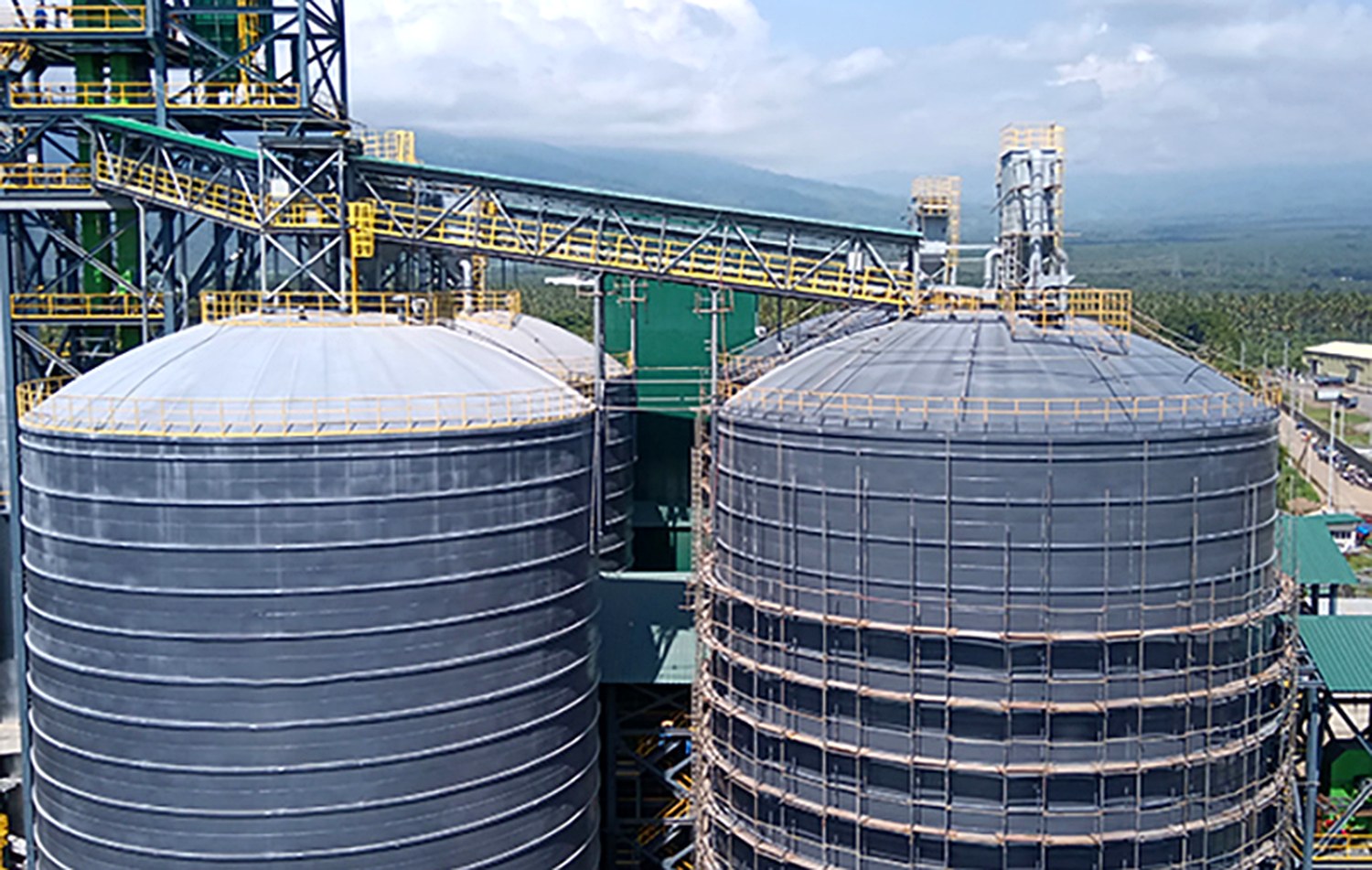
An air cannon is a pressure vessel (typically 50 to several hundred liters) charged to 4–8 bar that discharges in an instant through a nozzle into the silo. The blast shock-loads an arch or a caked zone and breaks it. Cannon selection follows the material and geometry: smaller silos and lighter materials work with 50-liter units, while silos over 5 meters diameter or heavy materials need 100–200-liter tanks. Placement is engineering, not decoration — cone walls at the height where arches actually form, multiple units staggered around the circumference. Operating discipline matters: cannons are for firing on demand or sensor-triggered bursts, not continuous cycling, and PLC interlock with discharge equipment cuts compressed-air waste dramatically compared with timer-based firing.
Fluidized Beds: Make the Powder Behave Like a Liquid
Fluidizing pads (aeration pads) inject low-pressure air — roughly 0.2–0.5 bar — continuously or cyclically through the hopper and lower shell. The air percolates through the powder, supporting the particles and letting gravity move the material as if it were far more flowable. Fluidization only works on materials that can be fluidized: dry, fine powders (under about 100 µm) respond best, and it is the standard companion of cement and fly ash discharge. Its hard limit: moisture. Once material moisture climbs past roughly one to two percent, air channels instead of permeating ("channeling"), wet material packs harder against walls, and fluidization not only fails but can worsen compaction.
Choosing Between Them — and Using Both
| Condition | Best tool | Rationale |
|---|---|---|
| Dry fine powder, routine discharge aid | Fluidized pads | Gentle, continuous, low energy |
| Hard arch in wet or coarse material | Air cannon | Shock breaks what aeration cannot reach |
| Large silo, heavy material (clinker, wet sand class) | 100–200 L cannons | Energy must match the mass |
| Cement/fly ash cone, chronic slow flow | Pads on lower shell + cannons at cone | The classic combined arrangement |
| Hygroscopic material caking repeatedly | Fix moisture ingress first | No flow aid beats chemistry |
The combined pattern is established practice for good reason: fluidization maintains normal flow in the lower shell and prevents "rat-hole" dead zones, while cannons at the cone handle the occasional hard arch that forms despite good aeration. A third tool — wall vibrators — deserves one caution: vibrators compact cohesive and wet material rather than loosening it in many cases, and on fine powders should be interlocked so they never run while the discharge gate is closed. Complementary engineering around the whole discharge chain — gate valves, metering feeders and airlocks — is covered in our discharge systems article.
Prevention Beats the Best Cannon
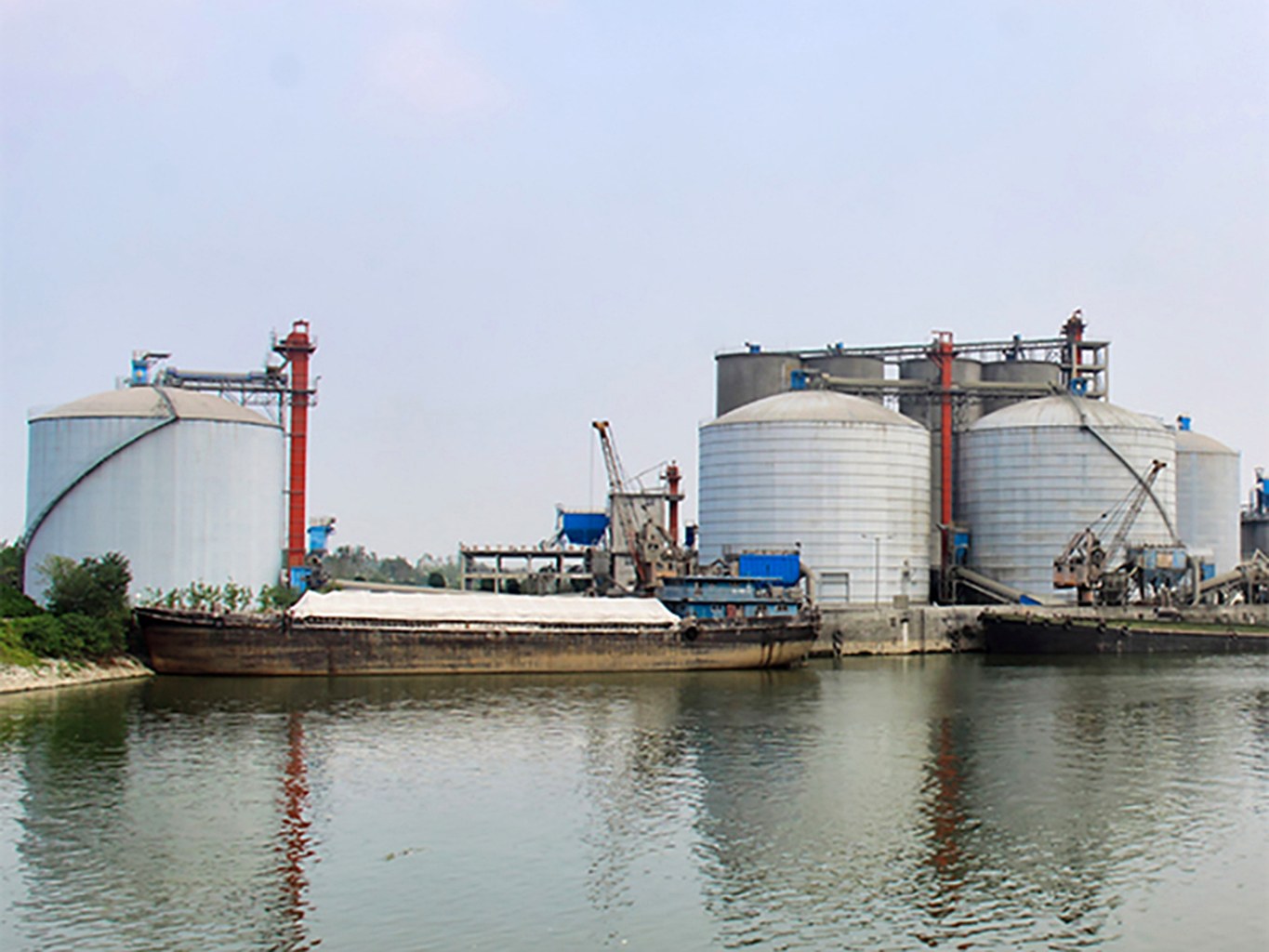
Every expert source converges on the same hierarchy: geometry first, flow aids second. A hopper angle and outlet size matched to the material's measured flow properties (shear testing where stakes are high) prevents arches that no cannon should be asked to break daily. Moisture control — sealed envelopes, dry aeration air — removes the caking driver, as detailed in our dust collection article's dry-air discipline. And economics favor early design: flow aids specified with the silo from the factory cost far less than retrofit campaigns, and sensor-interlocked firing saves roughly 40% of compressed air versus blind timer firing.
Designing the Retrofit: When a Silo Already Has Problems
Most flow-aid decisions are actually retrofit decisions — a silo that worked for years has begun blocking, and the plant needs relief without replacing the structure. The professional retrofit sequence: first, characterize the material as it actually is today, not as it was at commissioning — moisture, fines content, and where relevant, a flow-properties test on the current material; aging product lines and changed sources silently change flowability. Second, instrument before installing: discharge-rate trending and simple level checks identify whether the problem is arching at the cone, ratholing up the shell, or a caking annulus at the walls — three different failure maps that favor different hardware placements. Third, install in priority order: aeration pads in the lower shell where they restore normal flow, cannons at the measured arch height where they break what aeration cannot, and updated discharge gating where metering, not flow, is the constraint. Fourth, interlock and trend: sensor-triggered firing and rate monitoring convert the hardware from crisis response into routine management.
Plants that follow this sequence routinely find that the first two steps — knowing the material and the failure map — redirect half the originally imagined hardware budget. The silo that "needs cannons everywhere" often needs dry aeration air and one cannon at the right height.
The Economics of Flow Reliability
Flow problems are usually discussed as maintenance nuisances, but their true cost is operational and strategic. Direct costs: confined-space de-caking crews, expedited compressor hire when cannons fire all day against a losing battle, and the overtime that accompanies any unplanned silo outage. Indirect costs dwarf these: production scheduling built around a "difficult" silo, safety stock held elsewhere to buffer its unreliability, and the quiet normalization of slow discharge that shaves throughput from every cycle. Strategic costs appear when a terminal or plant cannot commit to delivery schedules because its storage behaves unpredictably — commercial risk priced into every contract. Against this ledger, the prevention portfolio is cheap: geometry designed for the measured material, moisture control at every boundary, flow aids installed with the silo rather than retrofitted after the first crisis, and instrumentation that catches degradation before it becomes blockage. Industry experience with discharge-aid economics shows factory-fitted systems costing far less than retrofit campaigns, and sensor-interlocked operation saving a large share of compressed-air cost versus blind cycling — numbers that make the reliability case before a single production hour is counted.
FAQ
Can I just add more cannons to a permanently blocked silo? You can, and for a one-time cleanup it sometimes works. But a silo that needs cannons daily has a geometry or moisture problem — measure the material, fix the root cause, and keep the cannons as insurance.
Why did my fluidizing pads stop working in rainy season? Almost certainly moisture: material water content above the one-to-two percent range channels the air and kills fluidization. Seal the silo and dry the aeration air before blaming the pads.
Are air cannons safe for food-grade silos? Yes, with oil-free compressed air and hygienic nozzles — the same air-quality discipline that applies to the rest of the system.