


Silo Panel Zinc Coating: What 275 g/m² Means
Almost every bolted corrugated silo sold today carries the same specification line: galvanized steel panels, zinc coating 275 g/m². The number is quoted everywhere and explained almost nowhere. What does that coating weight actually buy in years of service — and when is it not enough? This article converts the specification into engineering terms: thickness, corrosion rates and the environment classes that decide how long the zinc lasts.
What 275 g/m² Means in Physical Terms
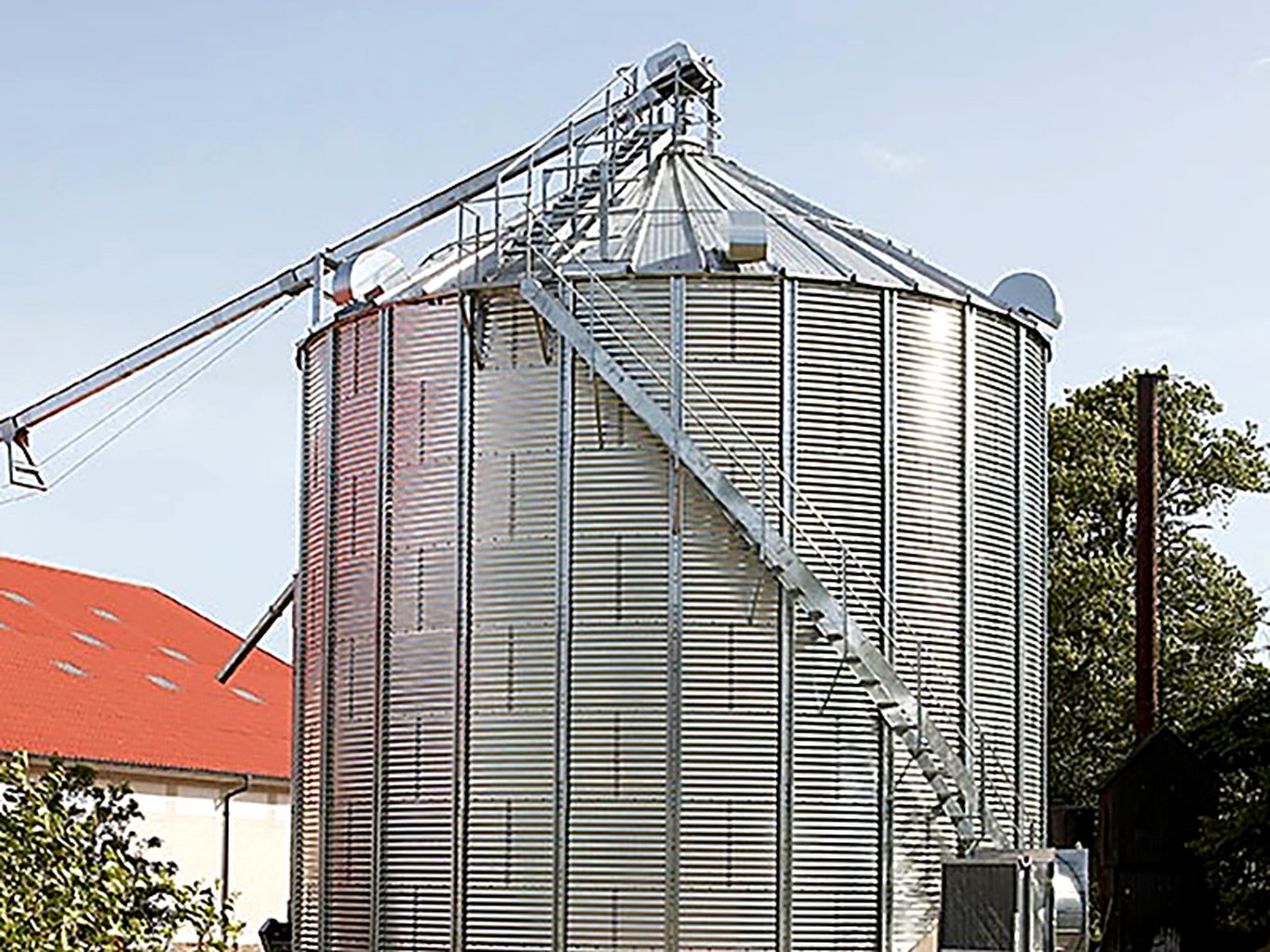
Coating weight and coating thickness are the same fact in two units. A 275 g/m² zinc coating, spread across both faces of the panel, corresponds to a zinc layer on the order of 20 micrometers per surface — a layer thin enough to bend with the panel during corrugating and roll-forming, thick enough to keep steel away from the weather for decades in the right climate. The substrate matters as much as the coating: corrugated silo panels are typically rolled from structural galvanized strip in the S350GD+Z class, where the zinc layer works together with a high-strength steel core.
The same coating logic protects every class of steel silo — corrugated bolted panels carry it as the base specification, and welded and spiral structures specify their own coating systems where paint or duplex protection is called for.
How Zinc Protects Steel: Two Mechanisms at Once
Zinc protects in a way paint cannot, because it does two jobs simultaneously. As a barrier, it physically separates steel from air and moisture. As a sacrificial anode, it also protects steel at every scratch, cut edge and bolt hole: where zinc and steel are exposed together, the zinc corrodes first and electrochemically shields the exposed steel. A scratched painted panel rusts at the scratch; a scratched galvanized panel heals itself slowly instead. For a structure assembled from thousands of panels and fasteners, each drilled and clamped on site, that self-protection at every joint is the reason galvanizing is the default.
Corrosion Categories and Service Life: The ISO Framework
The service life of a zinc layer is not a property of the zinc — it is a property of the environment. The ISO 12944 / ISO 1461 framework grades atmospheres from C1 (indoors, dry) to CX (offshore, extreme), each with a characteristic zinc loss per year:
| Category | Environment | Zinc loss (per year) | Time to first maintenance (ISO 1461 reference layer) |
|---|---|---|---|
| C1 / C2 | Indoors / rural, dry | ≤0.1 / 0.1–0.7 µm | Over 100 years |
| C3 | Urban and light industrial | 0.7–2.1 µm | 40–100+ years |
| C4 | Industrial, moderate coastal | 2.1–4.2 µm | 20–40 years |
| C5 | High humidity, heavy industry, coastal | 4.2–8.4 µm | 10–20 years |
| CX | Offshore, extreme | 8.4–25 µm | Well under 10 years for zinc alone |
Read against this table, a 275 g/m² layer — roughly 20 µm per face — sits at the lower edge of the C3 band. In a dry rural climate it is conservative; in genuine C3 service it typically delivers the decades the specification promises; and in C5 coastal or chemical environments it is simply the wrong specification on its own. The familiar "30-year silo life" figure belongs to the mild end of this table, not to all of it.
When 275 g/m² Is Not Enough
Two situations push past the standard layer. The first is environment: in C5 and CX atmospheres — coastlines, chemical plants, salt-laden wind zones — the correct engineering answer is a duplex system, zinc plus an organic coating, in which the paint shields the zinc from the worst of the environment and the zinc protects every imperfection in the paint. The second is wear: real service adds mechanisms the ISO table does not price in, such as wind-blown sand abrasion or nightly condensation cycles that keep the surface wet for hours, both of which consume zinc faster than the annual averages suggest.
For both situations, heavier coatings are the first escalation. Coating weights step up from 275 g/m² to the 450–600 g/m² class, with 600 g/m² the heaviest commercially available level today — doubling to tripling the zinc reservoir on the panel before any paint is added. Combined with a duplex topcoat in severe atmospheres, this is how galvanized silos are specified for coastal and industrial duty.
How to Specify Coating in Your Next Silo Order
A three-step discipline keeps the specification honest:
1. Classify the site first. Assign the corrosion category from actual site conditions — distance to coast, prevailing industry, humidity and condensation cycles — before choosing any number.
2. Match the coating to the class. C1–C3: standard 275 g/m² is sound. C4: 275 g/m² with inspection-friendly design, or step up. C5/CX: 450–600 g/m² zinc plus duplex coating — specified, not improvised. The same grading applies to welded silo and spiral structures through their own coating systems.
3. Verify at delivery. Coating weight is measurable — a magnetic or electron gauge reading on delivered panels, at flat areas away from corrugation peaks, confirms in minutes that the steel shipped is the steel specified.
What the Panel Specification Should Say
In practice, a complete coating specification on a silo order names five things: the steel grade and its coating designation (structural galvanized strip of the S350GD+Z class on corrugated panels), the coating weight in g/m² matched to the site corrosion class, the measured thickness verification method at delivery, the fastener coating — bolts and washers corrode faster than panels when their zinc is thinner than the sheet's, so hardware should match or exceed the panel specification — and, for duplex systems, the paint system reference over the zinc. Leaving any of the five to "supplier standard" is how a 600 g/m² project ships with 275 g/m² fasteners and starts rusting at every bolt line a decade early.
Frequently Asked Questions
How long will a 275 g/m² coating last?
It depends on the environment: typically decades in rural and light urban settings (C1–C3), 20–40 years in industrial atmospheres (C4), and only 10–20 years in coastal or heavy-industrial C5 zones — where heavier coatings or duplex systems should be specified instead.
What coating should a coastal silo project specify?
Escalate the zinc first — 450 to 600 g/m², the heaviest commercially available level — and add a duplex organic coating on top. Zinc alone at standard weight is under-specified for genuine C5/CX coastal service.
If the galvanized layer is scratched, will the panel rust through?
Not immediately — zinc protects sacrificially. At a scratch, the surrounding zinc corrodes preferentially and shields the exposed steel electrochemically, which is why galvanized panels tolerate bolt holes and cut edges that would begin rusting under paint alone.
Does corrugating or roll-forming damage the coating?
Not measurably when the process is right. The zinc layer is ductile and bends with the panel; the specification survives forming because coating weight is verified on the finished panel, not just on the incoming coil. Process damage shows up as flakes and bare patches at bends, which delivery inspection with a coating-thickness gauge catches immediately.
Zinc specification is a small line in a silo contract that quietly decides the structure's second and third decade. Our company manufactures steel silo systems on German silo-making equipment, and coating specification to the site's real corrosion class is part of every engineering proposal we issue. Tell us your site conditions, and the coating schedule will be matched to them rather than copied from a brochure.