


Why Aggregate and Sand Silos Need Wear-Resistant Design
Crushed stone, sand and manufactured aggregates look harmless sitting in a quarry stockpile. Inside a silo they are among the most destructive materials in bulk storage: hard-edged, dense, and constantly moving under pressure. A silo designed for grain or powder duty and repurposed for aggregate will wear through its working surfaces with surprising speed — and most of that damage is preventable at the design stage.
This article explains where aggregate wear comes from, which materials and details defend against it, and how silo configuration, hopper angles and discharge equipment should be selected when the stored material is essentially cutting tool.
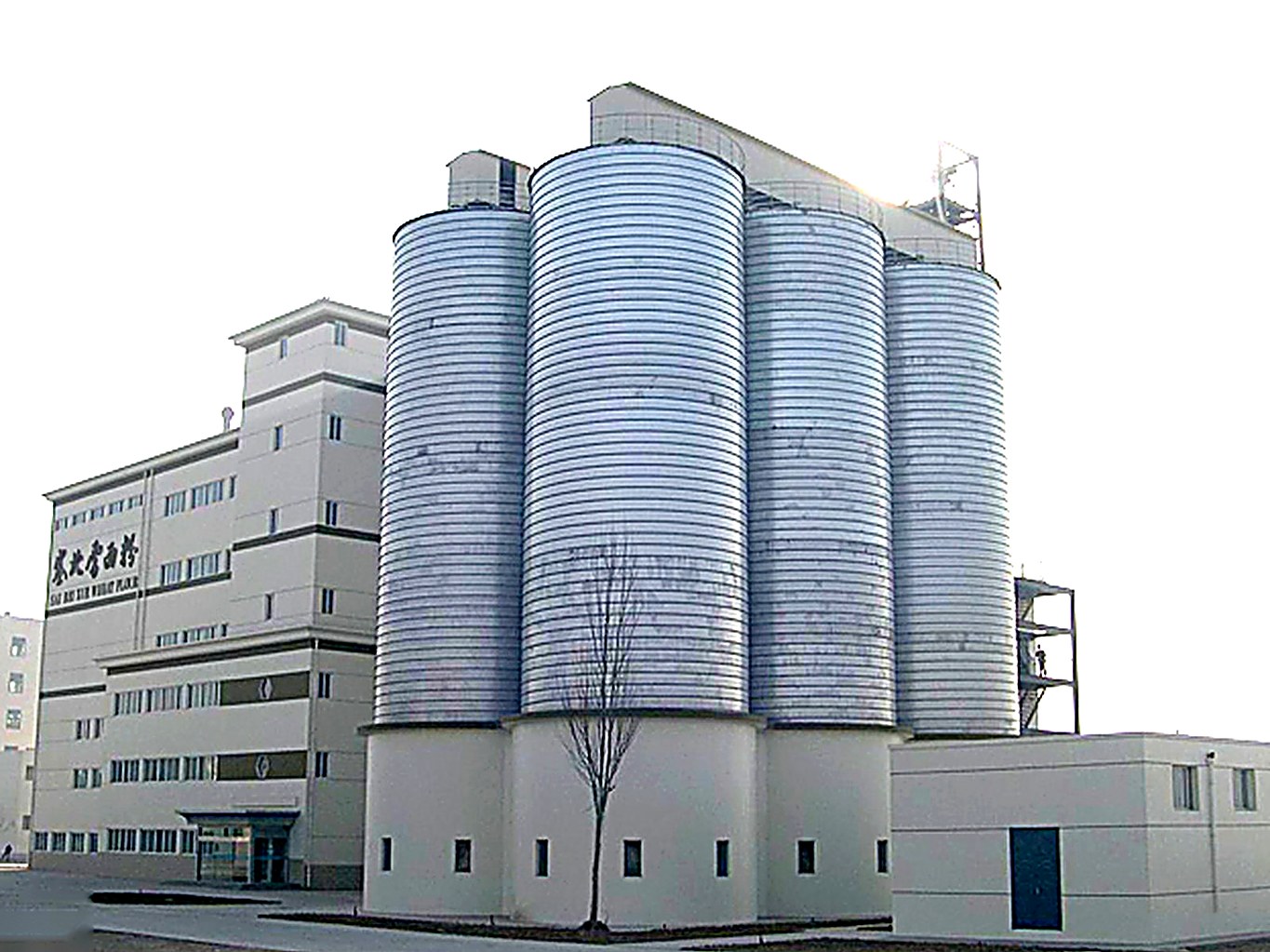
Why Aggregate Destroys Unprotected Silos
The hardness of the mineral sets the ceiling on everything. Crushed rock and mineral aggregates sit around Mohs 6–7 — the same hardness class as quartz — which means the stored material is harder than many of the surfaces it rests against. Wear in an aggregate silo combines two mechanisms: impact, where falling material strikes the wall and floor at filling, and abrasion, where particles slide under pressure across steel surfaces during discharge.
Unprotected steel pays for this quickly. In abrasive mineral duty, plain carbon steel silo walls show measurable thinning within about six months of service, and impact zones — the floor areas under the filling stream — can be worn through in 12–18 months when handling roughly half a million tons of hard rock such as granite. The lesson from the quarrying industry is consistent: wear is not a maintenance problem, it is a design specification.
The Wear-Resistant Toolkit: Plates, Ceramics and Stainless
1. Abrasion-resistant steel plate: the first defense is upgrading the working surfaces from structural steel to AR-class plate — AR400 or AR500, named for their approximate Brinell hardness. Liners in the >500 BHN class cost roughly 15–20% more than ordinary steel plate, but in abrasive aggregate duty they deliver 4–5 times the service life — a trade that pays back the premium the first time the silo avoids a mid-season relining.
2. Ceramic protection at the impact points: the most effective strategy is a composite one — wear-resistant steel for the shell surfaces and ceramic tile lining at the cone outlet and other concentrated-impact zones, where sliding wear is at its most intense. Ceramics outperform steel at resisting sliding abrasion; steel absorbs impact better. Placing each where it wins is what makes the protection economical.
3. Stainless lining where water is involved: wet manufactured sand changes the chemistry as well as the mechanics — moisture plus abrasive fines attacks carbon steel surfaces both mechanically and corrosively, so wet-sand duty calls for steeper hopper angles (more on that below) combined with stainless steel lining in the wear zones.
The configuration logic behind these choices — matching shell structure to material behavior — is covered on our welded silo page.
Silo Configuration Depends on Aggregate Size
Aggregate is not one material; storage configuration follows the particle size distribution:
1. Fine fractions — sand and stone powder up to about 10 mm: these flow relatively freely and suit cone-bottom silos, where gravity discharge through a steep hopper keeps the store self-cleaning and the material moves without needing reclaim machinery.
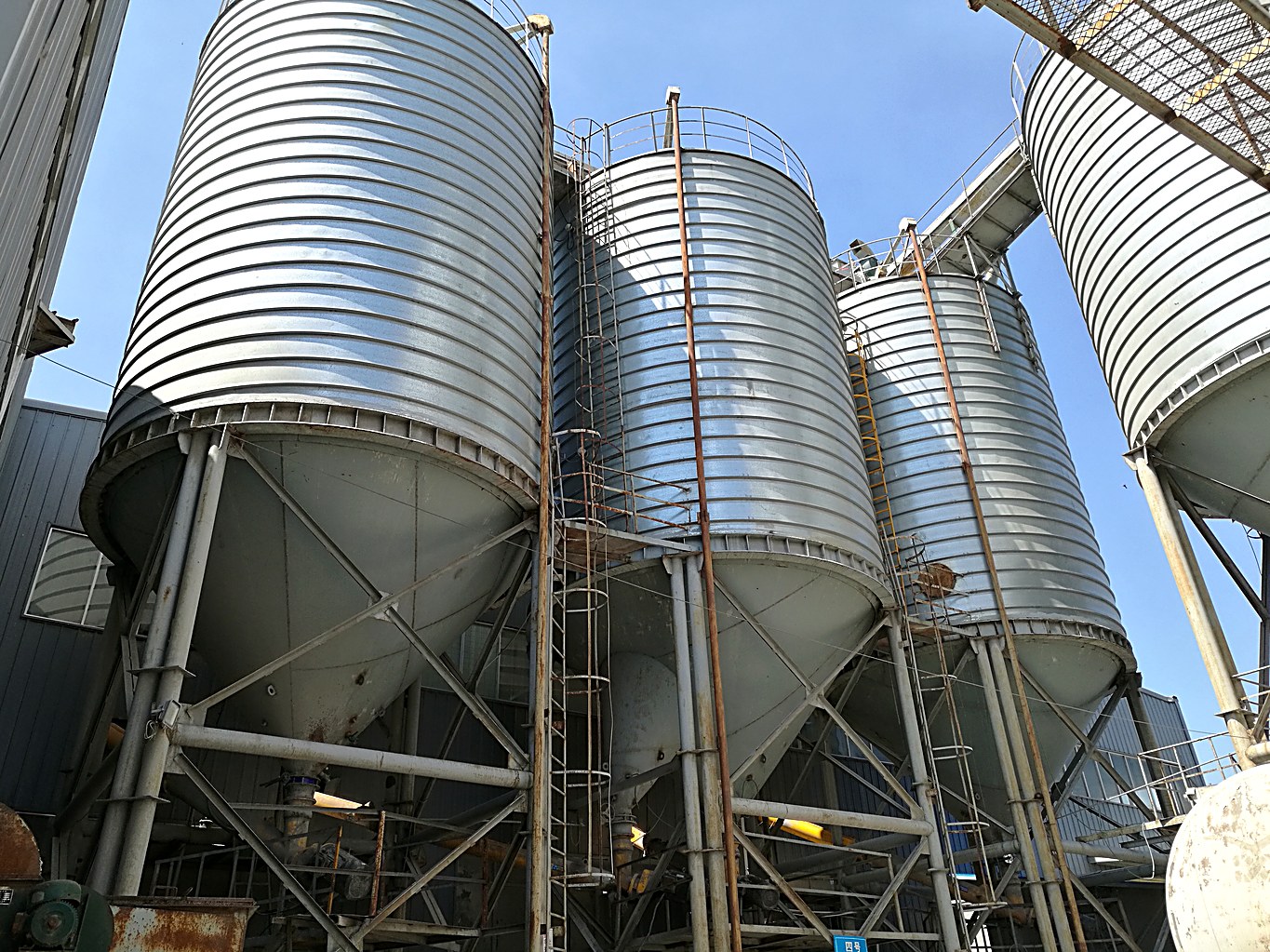
2. Coarse crushed stone above roughly 20 mm: large, angular particles do not flow cleanly through hoppers sized for practical construction, so the mainstream solution is the flat-bottom silo with a reclaim tunnel — material is drawn out through gates in the tunnel roof. The design trade must be understood at planning stage: a reclaim tunnel draws only the flowing core above it, so the live capacity of a flat-bottom aggregate silo is typically just 30–50% of its total volume, with the rest acting as dead storage until the silo is deliberately cleaned out.
3. Mid-range gradations: blended aggregates sit between the two behaviors, and the configuration choice weighs discharge completeness against reclaim system cost. This is a decision to make with the material's actual gradation in hand, not from a catalogue.
For how these configurations map onto steel silo structures in general, see our steel silo page.
Hopper Angles and Flow Patterns
Angle selection for aggregate follows the same physics as any bulk material, with the numbers shifted by the material's coarseness:
1. Dry aggregate: hopper wall angles of 55–60° are generally workable for dry material — steeper than grain duty expects, because angular particles interlock and the effective friction against the hopper surface is higher.
2. Wet manufactured sand: moisture raises both cohesion and wall friction, so wet sand duty calls for hopper angles of 65° or more, combined with the stainless lining described above — the angle keeps it moving, the lining survives the movement.
3. The two-angle rule: hopper design must satisfy two conditions simultaneously — the angle of repose sets the minimum slope that prevents a stable pile forming inside the hopper, and the wall friction angle determines whether material actually slides along the hopper surface. Designing from repose alone produces hoppers that look steep enough on the drawing and still arch in service.
4. Mass flow versus funnel flow: true mass flow — where every particle moves and the store empties in sequence — typically demands cone angles around 68–72°. Funnel flow is 20–30% cheaper to build but leaves stagnant zones that arch, rat-hole and segregate; for aggregate duty that is usually an acceptable trade in large flat-bottom stores with reclaim tunnels, and an unacceptable one in cone-bottom silos expected to empty fully.
Wall pressure adds the structural dimension: as depth increases, the lateral pressure a granular column exerts on the wall approaches a limit rather than growing without bound — which is why silo walls are designed with cylinder-pressure physics, not tank logic, and why aggregate silos should always be engineered for the material's actual density and friction values.
Wear Protection in Discharge and Conveying
Wear does not stop at the silo wall — the discharge chain lives with the same material every day:
1. Screw conveyors: for abrasive aggregate classes, screws run with reduced filling coefficients and their flights are hardfaced with chromium carbide or fitted with replaceable AR400/500 liner segments. Pushing an abrasive-duty screw beyond its class is the fastest route to worn flights and overloaded motors.
2. Bucket elevators: bucket material follows the material — steel buckets for abrasive aggregate duty, with the elevator's digging and discharge characteristics matched to coarse, lumpy feed rather than free-flowing grain.
3. Transfer points: every chute, gate and hopper in the discharge path receives the same treatment as the silo floor — impact-resistant lining where material lands, abrasion-resistant plate where it slides. Wear protection specified system-wide costs less than wear protection discovered component by component.
Frequently Asked Questions
What cone angle should a sand silo use?
Dry sand and fine aggregate generally work with hopper wall angles of 55–60°. Wet manufactured sand needs 65° or steeper, combined with stainless lining in the wear zones, because moisture raises both cohesion and wall friction. The angle must satisfy both the repose condition and the wall-friction condition — checking only one is how arching problems are designed in.
How much extra does wear-resistant design cost — and what does it return?
AR400/500 class liners run roughly 15–20% above ordinary steel plate, but deliver about 4–5 times the service life in abrasive duty. In hard-rock service where unprotected steel wears through in months, the premium is typically recovered the first time the silo avoids an unscheduled relining campaign.
Why is the live capacity of a flat-bottom aggregate silo so low?
A reclaim tunnel withdraws material through gates and draws down only the flowing core above it — the surrounding material stands at its angle of repose and does not reach the gates. Live capacity of 30–50% of gross volume is the normal consequence; planning that treats gross volume as usable tonnage will overstate the store by half.
Wear-resistant storage engineering is where steel silo fabrication experience shows itself most clearly. Our company designs and manufactures steel silo systems with German silo-making equipment on the production line, and aggregate storage is one of the duties where that manufacturing precision — in plate preparation, lining fit-up and weld quality — translates directly into service life. If you are planning a sand or aggregate storage silo, send us the material gradation, moisture range and daily throughput, and our engineering team will propose the configuration, hopper angles and wear protection the duty actually requires.