


How Does a Silo Discharge System Work? Cone, Screw and Fluidized Options
Most silo problems people call "storage problems" are actually discharge problems. The shell holds material comfortably; it is getting the material out — completely, at the required rate, day after day — that decides whether a silo earns its keep. This article explains the three mainstream discharge approaches, the flow physics underneath them, and how to match the system to the material.
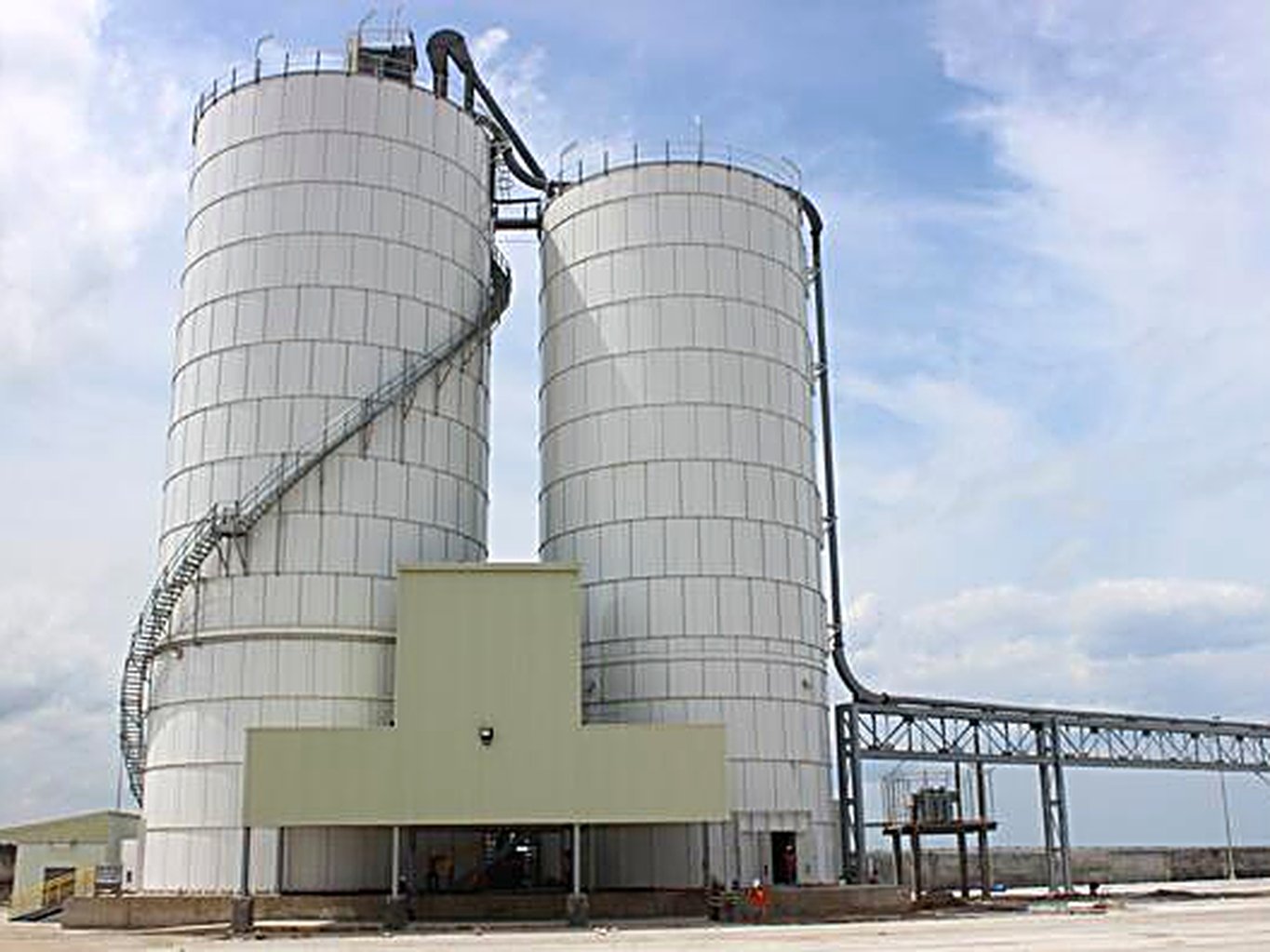
The Core Problem: Getting Material to Move
Material inside a silo is under pressure — its own weight, compacting for as long as it sits. Fine powders are the extreme case: they de-aerate under load, regain cohesive strength, and above roughly 15 meters of storage height can compact hard enough to bridge solidly over the outlet. Granular materials interlock and arch instead. Either way, the discharge system's real job is to defeat the strength the material has built up — with gravity, with machinery, or with air.
Which of the three wins depends on the material's size, cohesion and moisture, and on how completely and how fast the silo must empty.
Gravity Discharge: Cone Angles and Flow Patterns
The simplest discharge is the material's own weight through a hopper — and the critical design variable is the flow pattern it produces:
1. Mass flow: every particle moves whenever any particle moves; the silo empties in sequence, first-in first-out. Achieving it typically requires cone angles around 68–72° for difficult materials — steep, and therefore taller and more expensive per ton stored, but the store discharges completely and blends itself in the process.
2. Funnel flow: only a channel above the outlet moves while material near the walls stands still. It is roughly 20–30% cheaper to build and perfectly adequate for materials that flow readily and stores that are emptied regularly — but stagnant zones are where cohesive materials arch, rat-hole and segregate.
Angle selection has to satisfy two conditions at once: the material's angle of repose sets the minimum slope that prevents a stable pile forming in the hopper, and the wall friction angle determines whether material actually slides along the hopper surface. A hopper designed from repose alone can look steep enough on the drawing and still arch in service. And the structural side is its own discipline — wall pressure grows with depth toward a limit described by Janssen's classical analysis rather than increasing without bound, which is why silo shells are engineered with cylinder-pressure physics and material-specific friction values.
Screw Discharge: Controlled Metering
Where material must be metered — fed at a controlled rate to a process, a packer or a transporter — the screw conveyor is the workhorse. Its sizing is a materials problem before it is a capacity problem:
1. Filling coefficient by material class: free-flowing grain runs at 0.3–0.45 trough filling; cement and fly ash at 0.30–0.35; sticky, abrasive duties like wet clay or clinker drop to 0.15–0.25. Running a screw above its class is the fast track to worn flights and overloaded motors.
2. Inclination costs capacity: each degree of incline takes throughput away — a screw loses roughly 15% of capacity at 15°, about 40% at 25°, and around 70% at 45°, which is why steep lifts belong to bucket elevators, not screws.
3. Wear protection is specified, not hoped for: abrasive duty calls for flights hardfaced with chromium carbide or fitted with replaceable AR400/500 liner segments — sacrificial surfaces that turn a wear event into a bolt change. In large flat-bottom stores, the same logic appears as the reclaim screw: a full-length discharge screw under the silo that sweeps the floor and converts flat-bottom storage into continuous discharge.
Fluidized Discharge: For Fine Powders
Fine powders — cement, fly ash, flour, soda ash — defeat gravity hoppers by gaining strength in storage. Fluidization answers with air: the discharge floor or cone is fitted with aerators that feed low-pressure air into the material boundary, temporarily restoring the fluid behavior the powder had when it arrived. Two tools share this territory:
1. Fluidizing pads — the preventive tool: continuous low-pressure air at 0.2–1.0 bar keeps the material de-aerated and moving before problems form. For dry fine powders below roughly 200 microns, fluidization is clearly the superior option — the powder fluidizes readily and flows like liquid to the outlet. Wet, coarse or highly cohesive materials (above roughly 8–10% moisture) are the exception: aeration compacts them into a block instead of mobilizing them.
2. Air cannons — the reactive tool: where an arch or rat-hole has already formed, compressed-air cannons deliver a millisecond-scale blast at 6–8 bar to break it. Discipline matters: cannons fire top-down in sequence, never all at once — firing upward compacts material into the arch above, and simultaneous firing can shock-load the shell.
The economics justify the hardware: aeration can shorten discharge times by roughly 30%, and a complete aeration package on a 500-ton powder silo — blower, dryer, pads and controls — typically adds 8–12% to project cost, recovered in flow reliability and reduced operator intervention.
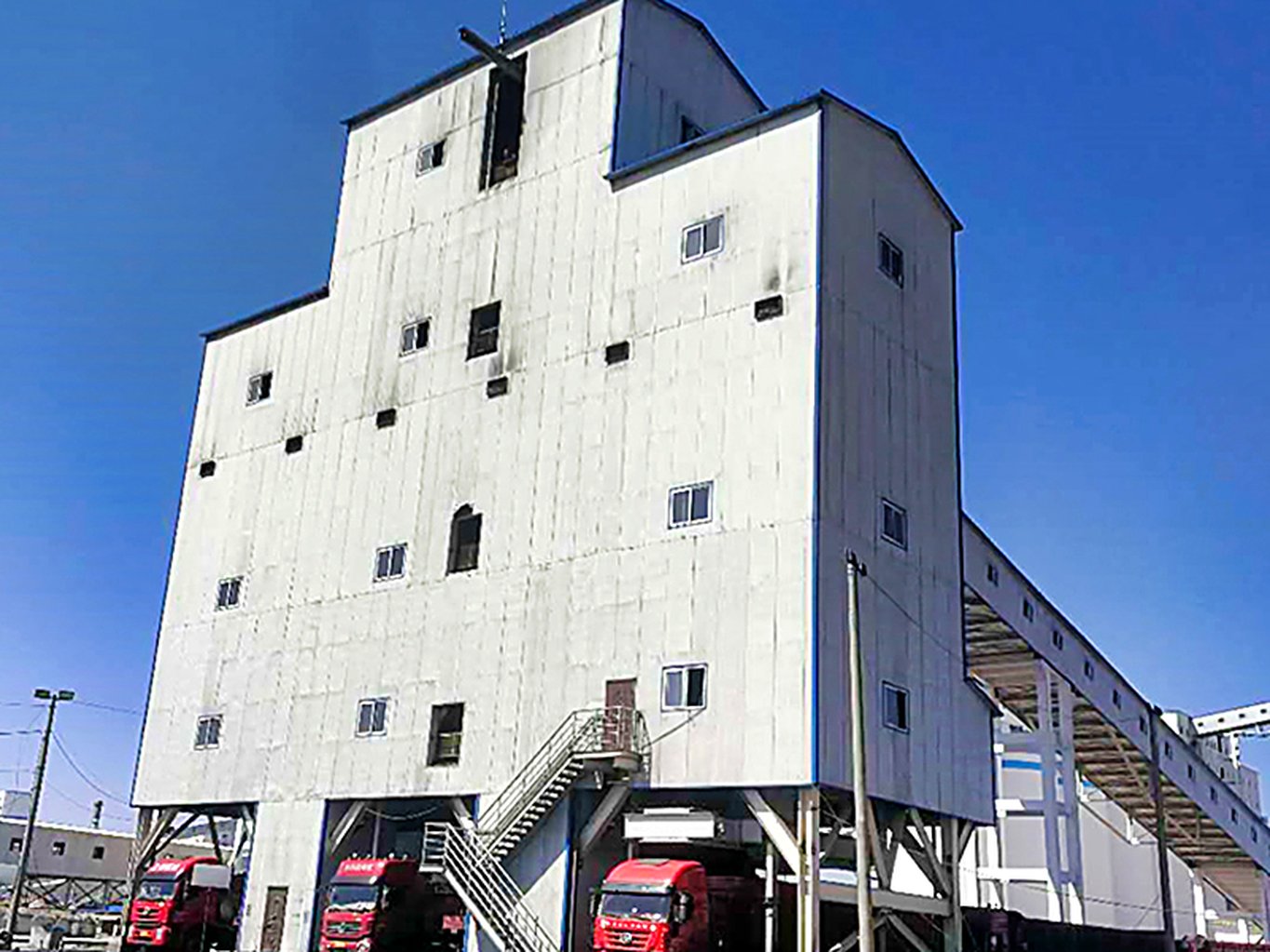
Metering at the Outlet: Rotary Valves and Gates
Below the discharge point sits the equipment that turns flow into controlled flow. The rotary airlock valve is the standard for powder systems — and its selection starts with the duty, not the flange size: continuous gravity discharge to a chute, metered feeding to a process, or feeding a pneumatic conveying line each call for different valve characteristics. Typical operating speeds run 10–30 rpm; above that, the pockets never fill and capacity stops increasing. Construction follows the same duty split: drop-through valves release material by gravity below the valve, while blow-through designs let conveying air pass through the rotor itself — each matched to the layout and material it serves.
Matching the System to the Material
The three approaches reduce to a compact selection logic:
| Discharge option | Fits best | Avoid when |
|---|---|---|
| Gravity cone (mass flow) | Free-flowing grain; complete first-in-first-out emptying | Very large flat stores where structure cost dominates |
| Screw / reclaim screw | Controlled metering; large flat-bottom stores; abrasive duty with lined flights | Steep lifts and duties needing complete self-emptying by gravity |
| Fluidized discharge | Dry fine powders below ~200 μm (cement, fly ash, flour) | Wet, coarse or cohesive material above ~8–10% moisture |
Real projects combine them: a cement silo discharges through a fluidized floor into a metering screw; a grain terminal empties flat stores with reclaim screws while cone cells handle daily turnover. The material's data decides the combination — for how these systems map onto silo structures in general, see our steel silo page, and for the welded construction behind most powder-duty installations, the welded silo page.
Frequently Asked Questions
What is the difference between mass flow and funnel flow?
Mass flow moves every particle whenever discharge runs — the store empties in sequence, with no stagnant zones. Funnel flow draws a channel above the outlet and leaves material near the walls standing. Mass flow typically requires cone angles around 68–72°; funnel flow is 20–30% cheaper but arches, rat-holes and segregates with difficult materials.
When is fluidized discharge the right choice?
For dry fine powders — cement, fly ash, flour, fine ash below roughly 200 microns — where gravity alone cannot overcome the strength the powder builds in storage. It is the wrong tool for wet or coarse material above roughly 8–10% moisture, which compacts under aeration instead of flowing.
Does a rotary valve run faster to discharge more?
No — pockets need time to fill. Capacity rises with speed only up to roughly 10–30 rpm; beyond that the pockets never fill completely and throughput stops increasing. Sizing comes from the duty and pocket volume, not from speed.
Discharge is where a silo project's engineering quality shows itself first and most often. Our company designs and manufactures steel silo systems on German silo-making equipment, and powder-duty discharge — aeration, metering, sealing — is the territory where that manufacturing precision pays back daily. If you are planning a silo for a material that has ever stopped flowing, send us the material data and required discharge rate, and our engineering team will propose the discharge system the duty actually requires.