


Corn vs Wheat vs Soybean: How Storage Differs
The three great storage grains — corn, wheat and soybeans — pass through the same silos, ride the same conveyors and sit under the same roofs. And yet they differ from each other in moisture tolerance, airflow behavior and spoilage mechanics enough that a storage system designed around one of them will quietly mishandle the others. Facilities that change crops with the season, or merchants who buy whatever the market offers, get the best return from their silos only when the engineering reflects all three behavior profiles. This article compares them dimension by dimension and translates the differences into design decisions.
Moisture Rules Compared
The headline numbers — summer safe-storage moisture — look deceptively close:
| Grain | Summer safe moisture | Notes |
|---|---|---|
| Corn | About 13% (13–14%) | Damage kernels and broken material raise the effective risk above the nominal number |
| Wheat | About 13% | Dries easily in the field; main threats after storage are insects and moisture migration, not initial moisture |
| Soybeans | About 11% | High oil content spoils faster at equal moisture — beans need roughly two points drier than corn for the same storage life |
Beneath the table sits a second concept that matters more than any single number: allowable storage time. Grain does not fail on a date; it accumulates spoilage credit with every day spent warm and damp. High-moisture corn at 22% holds roughly 190 days at 30°F — and only about 30 days at 50°F. Same grain, same moisture, sixfold difference: temperature does the work. This is why cooling the mass early matters more than agonizing over the last half-point of moisture, and why monitoring-driven aeration pays for itself in the first warm autumn.
Aeration Behavior: Three Grains, Three Airflows
Airflow design numbers differ by grain. In fan terms, natural-air drying calls for at least about 1 cfm per bushel for corn (applied up to around 21% moisture, started at 40°F-class weather) and the same for soybeans at 15–16%, while wheat needs about 0.75 cfm per bushel up to 17% — wheat's smaller kernel packs tighter and dries with less air. In metric design-rate terms, aeration systems are commonly sized around 0.1–0.15 m³ per minute per ton for corn, 0.08–0.12 for wheat and 0.12–0.18 for paddy — figures that a mixed-duty facility should treat as a design envelope, not interchangeable defaults.
Soybeans add a twist that runs the other way: they resist airflow about a quarter less than corn, so the same fan moves more air through beans — good for drying speed, but a fan sized purely for corn will over-ventilate beans and risk over-drying them right past the crack threshold. Fan control that follows the grain, not the calendar, is the fix.
Spoilage Risk and Special Handling
1. Corn: molds and broken material. Corn's enemies are the field molds that arrive with it — aflatoxin risk sits at the intake, not just in storage — and the broken kernels and fine material that pack into zones where air will not reach. Corning success is largely intake discipline: clean before storage, monitor temperature aggressively, aerate on strategy.
2. Wheat: insects and post-harvest ripening. Wheat often enters storage slightly above ideal moisture while still finishing its after-ripening chemistry, then faces its main long-term enemy: insects in a warm mass. The classical answer is early cooling, then sealing and surface covering — a tightly covered, cooled wheat mass denies both oxygen circulation and insect mobility.
3. Soybeans: oil, coats and bruises. Beans spoil from oil oxidation ahead of mold, crack their seed coats under hot dry handling (drying air under 40% relative humidity, continuous-flow dryers above roughly 130°F), and lose germination to impact falls. Soybean handling is gentle handling — the only one of the three grains where the conveying system is a quality-critical component.
Silo Design Implications, Side by Side
| Design aspect | Corn | Wheat | Soybeans |
|---|---|---|---|
| Aeration sizing basis | 0.10–0.15 m³/min·t | 0.08–0.12 m³/min·t | Corn-class ducts; beans flow 25% easier |
| Monitoring emphasis | Temperature + moisture cables | Temperature; insect checks at surface | Temperature + moisture; germination sampling |
| Intake handling | Standard | Standard | Gentle paths, cushioned falls mandatory |
| Drying integration | Natural-air at ≥1 cfm/bu | Low-rate, ≥0.75 cfm/bu | Low-temp only; no added heat for seed/food lots |
| Lot-changeover cleaning | Thorough | Thorough | Strictest — oily residue affects next lot |
| Sealing emphasis | Standard fumigation-grade | High — cover-and-seal strategy | Standard |
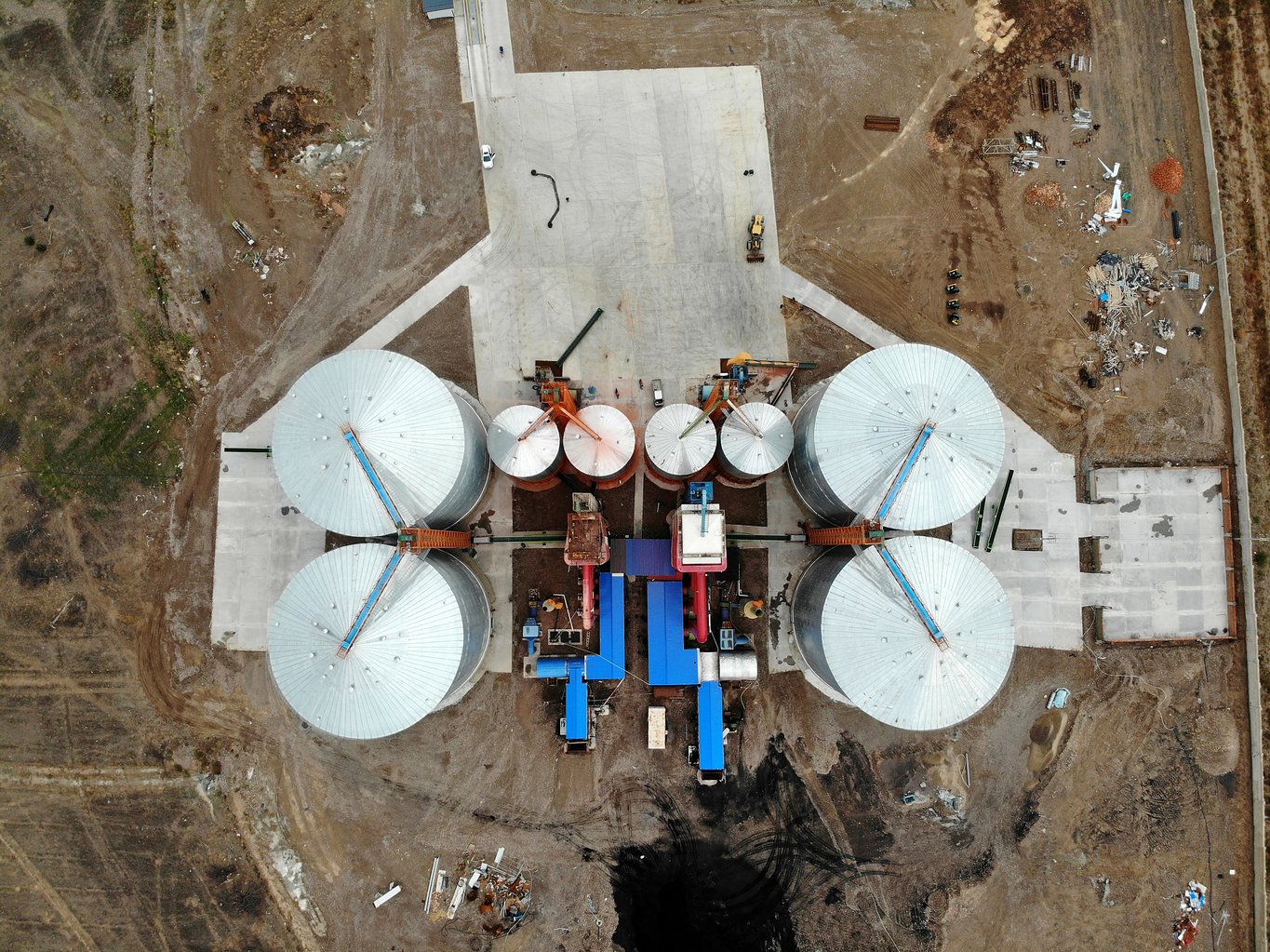
For facilities running all three crops through one battery, the controlling design is the union of the columns: corn-class aeration capacity, soybean-class gentle handling, wheat-class sealing — with a grain silo structure and monitoring layer specified to switch profiles by crop. Where long-duration quality storage is the priority, the techniques in our low-temperature grain storage guide extend the same principles further.
A Season with Three Grains: Operating One Battery
The comparison becomes concrete in a facility that actually rotates all three. After corn harvest, the battery runs at corn parameters: high airflow drying zones, aggressive temperature watch on fresh warm grain, intake cleaning ahead of storage. As wheat arrives, the same silos shift profile: lower airflow settings, early cooling runs, then cover-and-seal practice on lots destined for months of residence. When beans come in, handling speed drops at intake, fall heights get checked and re-cushioned, fan schedules switch to the bean plan, and the cleaning standard between lots steps up a grade.
What makes the rotation workable is not heroics — it is that each parameter shift was designed in from the start: fans with the range to serve both corn-class and wheat-class rates, monitoring cables that read any of the three crops, intake equipment specified to the gentlest crop in the plan. Retrofitting gentleness or extra fan range after the concrete is poured is where rotations fail; buying the union of requirements up front is where they pay.
The Grading Standards Behind the Specs
All three grains trade against grading standards that price exactly the defects storage practice prevents: test weight, damaged kernels, and — for corn — broken corn and foreign material. A storage system that lets moisture drift, insects establish or coats crack converts grade into discount at the buyer's table. Reading the local grading schedule before finalizing silo operation parameters is the cheapest quality planning a facility can do.
Frequently Asked Questions
Can one silo rotate between corn, wheat and soybeans?
Yes, with discipline: aeration set by the incoming grain's profile, intake handling set to the gentlest crop in the rotation, and strictest-changeover cleaning after soybeans. What cannot rotate is the fan schedule or the monitoring plan — those follow whichever grain is inside.
Which of the three is hardest to store?
Soybeans, for equal care: their oil spoils at moisture levels where corn and wheat sit comfortably, so beans need the driest initial condition and the gentlest handling. Wheat's challenge is insects; corn's is field-mold intake and broken-material management.
Do soybeans need bigger fans than corn?
No — they need smarter ones. Beans actually flow air about 25% more easily than corn, so corn-sized fans over-deliver; the design question is control, running fans to the bean's drying plan instead of a fixed schedule.
Three grains, one structure — the engineering that reconciles them is airtight moisture planning, crop-aware aeration and honest handling limits. Our engineering center designs grain silo systems on German silo-making equipment and participates in national grain-storage standard work; bring us your crop rotation and turnover, and the system will be specified for all of your grains, not just the first one.