


Flat-Bottom vs Hopper-Bottom Grain Silos Compared
The first fork in every grain silo project is the bottom. Flat-bottom or hopper-bottom is not a finishing detail — it decides the foundation, the discharge machinery, the cleaning regime and the unit cost of everything above it. And the single most direct deciding factor is capacity: large single-silo capacities are built flat-bottomed, period — a 10,000-ton silo, whether storing grain or industrial material, sits directly on the ground or on a foundation slab, with no hopper precedent at that scale — while small silos of, say, the 500-ton class are almost always built with a hopper bottom, because at that size gravity discharge is simply too convenient to pass up. Between those poles, structure and duty decide, and this article compares how the two bottoms actually work.
Flat-Bottom Silos: Mass Storage, Sweep Discharge
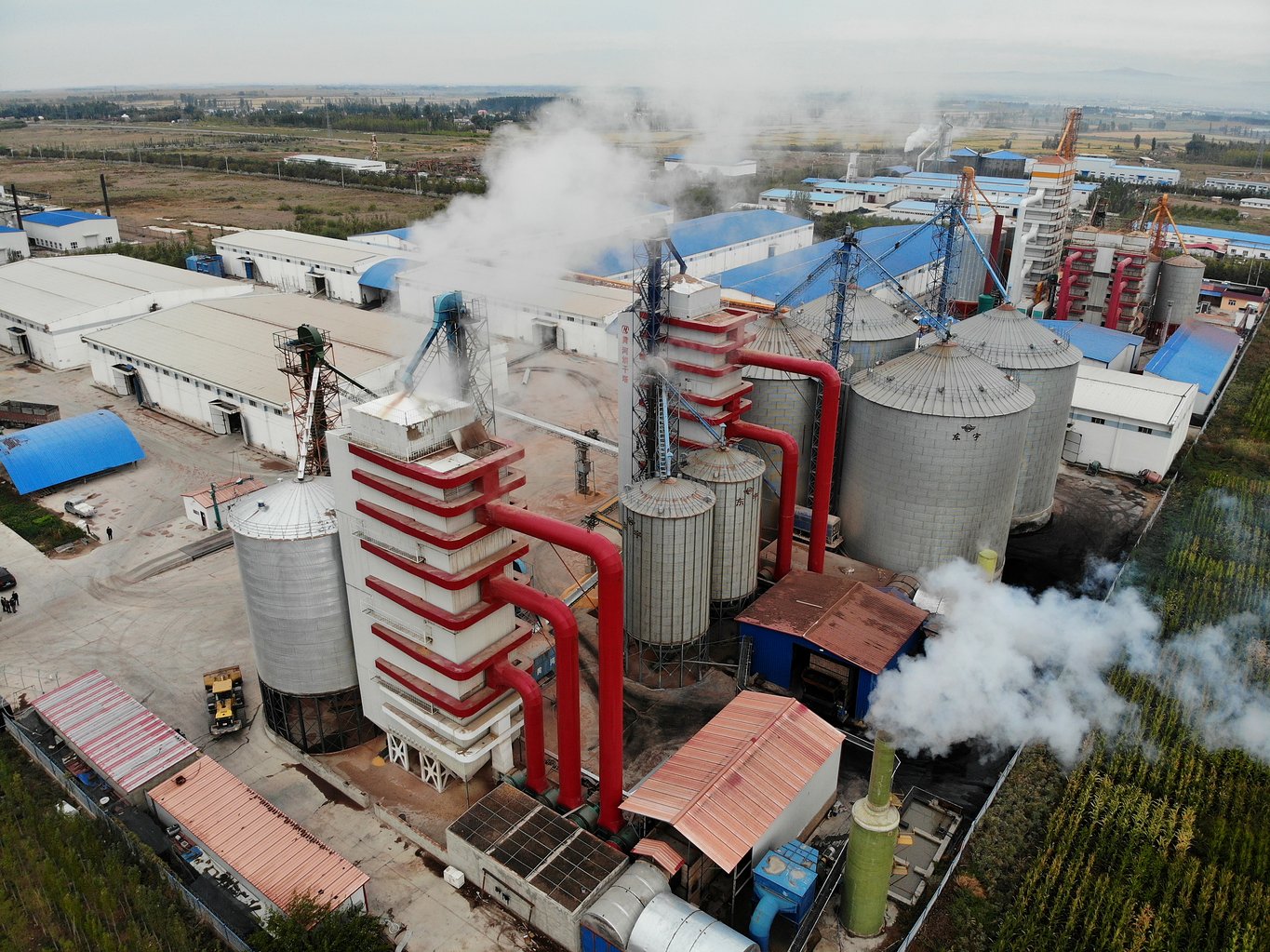
A flat-bottom silo is exactly what the name says: a cylindrical shell standing on a flat concrete base, typically with aeration ducts cast or mounted into that floor. Grain discharges through one or more outlets by gravity alone until a cone of grain remains; a sweep auger then travels the floor and feeds the last grain to the outlet — usually with a final manual cleanup pass, because sweep equipment leaves a residue layer that hand clearing removes.
The economic logic is scale: above roughly 25,000 bushels per silo, flat-bottom structures carry a clearly lower cost per stored bushel than hopper designs, which is why the large-capacity class — reserve depots, port terminals, processing plants — is flat-bottom territory. Flat floors are also where the full reserve-technology package lives: full-floor aeration, deep temperature cabling, sealed fumigation. The grain silo product line covers this class across capacities.
Hopper-Bottom Silos: Gravity Flow, Total Clearance
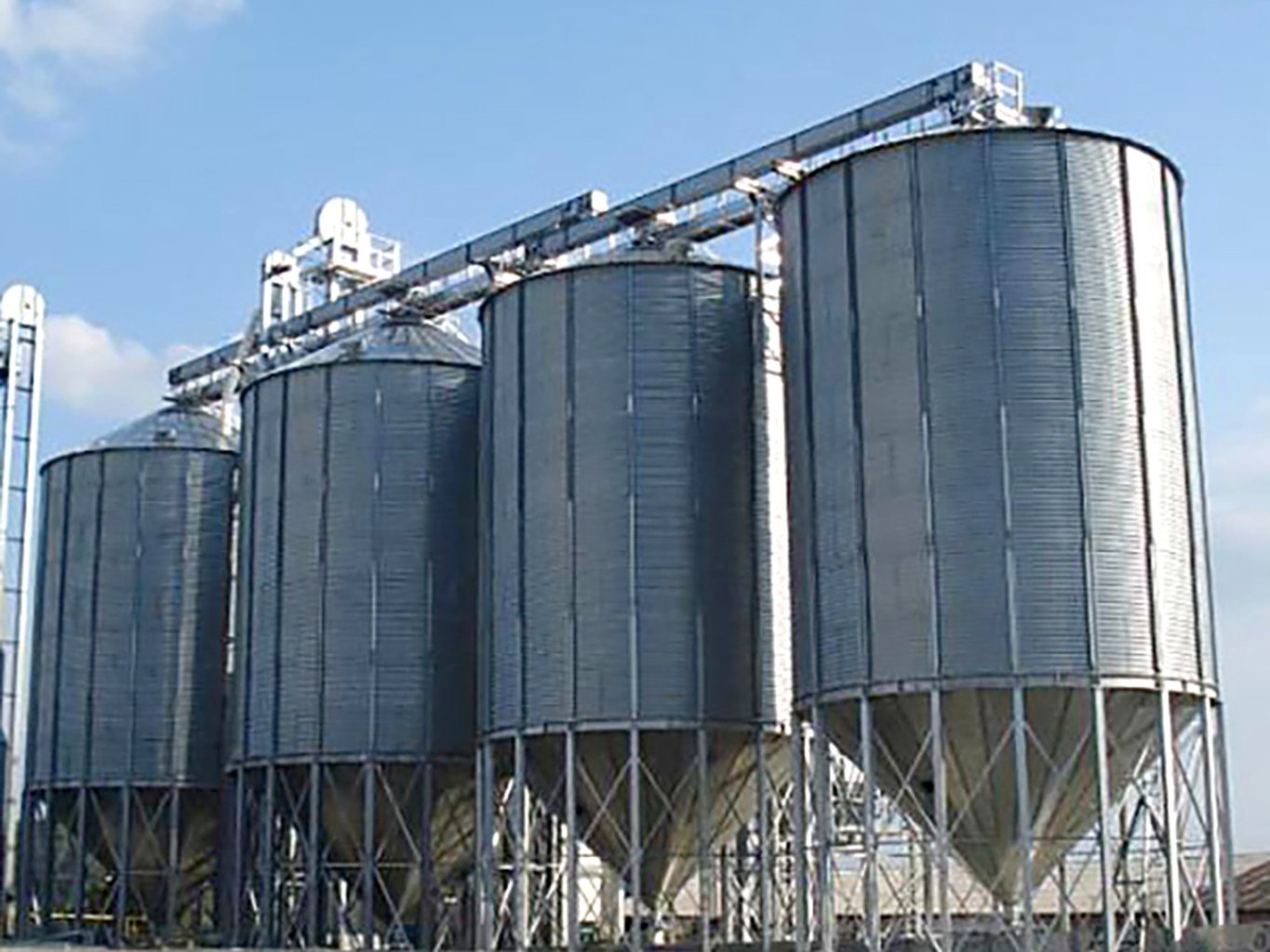
A hopper-bottom silo raises the cylinder on a support structure and terminates it in a steel cone — most commonly at 45° or 60° — so that grain discharges entirely by gravity. When the outlet opens, the silo empties completely: no sweep auger, no residue layer, no entry for cleanup. What costs more per bushel at large scale buys something small and medium installations value more — total discharge.
The duty list follows the physics. Seed grain storage demands hopper bottoms because complete clearance between lots prevents variety cross-contamination. Wet-holding bins ahead of dryers, day bins at processing lines, and high-turnover buffer silos all favor hoppers because they empty fast, clean and repeatedly. The bolted silo construction class covers most of these duties in the small-to-medium capacity range where hoppers dominate.
Discharge Principles, Side by Side
| Aspect | Flat-bottom | Hopper-bottom |
|---|---|---|
| Discharge drive | Gravity + sweep auger + manual finish | Gravity only |
| Clearance between lots | Partial — residue layer remains | Complete |
| Cost per stored unit at scale | Clearly lower (above ~25,000 bu) | Higher — cone steel plus support tower |
| Foundation | Flat concrete slab with aeration ducts | Footings plus elevated support structure |
| Monitoring / aeration fitout | Full reserve package on the floor | Compact systems, smaller grain mass |
| Typical duties | Reserve depots, terminals, long-duration stock | Seed, wet holding, day bins, high turnover |
Flow Pattern: Mass Flow vs Funnel Flow
Underneath the hardware choice sits a flow-mechanics choice. In mass flow, the whole grain column moves downward together — the profile that hopper bottoms are angled to produce, with steep cones typically in the 45–60° class (and steeper, around 68–72°, for less free-flowing materials, as a rule of thumb) ensuring material moves along the walls rather than draining through a central pipe. In funnel flow, grain moves through a central channel while the surrounding mass stands still — the natural pattern of a flat floor, acceptable for dry grain in turnover but hostile to anything that degrades, cakes or must stay lot-separated. Recognizing which pattern a bottom produces explains most of the practical differences in the table above.
Foundations and Site Work Compared
The bottom choice also writes the civil works list. A flat-bottom silo needs a flat, level concrete slab engineered for the full grain load, with aeration ducts and discharge tunnels or openings integrated before the first pour — the slab is the silo's floor and its airflow plenum at once, so its tolerances matter to both structure and airflow. Settlement behavior and soil bearing capacity enter the design at this point; a silo this heavy forgives no under-designed base.
A hopper-bottom silo inverts the civil picture: the grain load concentrates through a support structure into footings, and the space beneath the cone becomes working room — discharge gates, conveyors, weighing equipment all live under the silo, protected and accessible. That clear space under the cone is not a by-product; on many processing sites it is the reason the hopper was chosen, because it lets gravity deliver grain straight into the next process step with no intermediate conveying. The trade is a more complex steel structure above ground instead of a more demanding slab below it — and at small capacities, the tower-and-footing package wins that trade routinely, just as at large capacities the flat slab wins it.
How to Choose: Four Questions
1. What is the single-silo capacity? The first question, because it can end the discussion: large-capacity duties are flat-bottom by industry practice, small-capacity duties almost always hopper — size the storage plan before agonizing over bottoms.
2. How completely must each lot clear out? Seed, export lots and identity-preserved grain demand hopper completeness; commodity stock in rotation tolerates sweep-and-clean residue.
3. How often does the silo turn? Daily cycling favors gravity discharge; seasonal storage amortizes the sweep system easily.
4. What stands under the silo? A flat slab with aeration ducts, or footings and a support tower with discharge equipment beneath — the foundation answer often settles the budget answer.
Frequently Asked Questions
How long does it take to empty a flat-bottom silo completely?
Gravity discharge empties most of the mass quickly; the final floor layer is the time cost. A sweep auger works it to the outlet progressively, with a manual finishing pass for the residue — hours of work rather than the minutes a hopper's last ton takes.
How large can a hopper-bottom silo be built?
Commercial hopper designs reach impressive volumes, but the economics turn against the cone well before the large-capacity class: steel for the cone and support tower grows faster than capacity does. That is why big single-silo storage — the 10,000-ton class — is flat-bottomed as a rule, regardless of the material stored.
Why must seed grain use a hopper bottom?
Lot purity. Flat floors retain a residue layer that sweep equipment does not fully recover, and any carryover between seed varieties is contamination. A hopper discharges every kernel by gravity, so each lot leaves the silo complete.
Can I add a sweep auger later to a flat-bottom silo that did not ship with one?
Often yes — the outlet count and floor layout determine how cleanly a retrofit sweep fits, so it is far cheaper to decide at order time. What cannot be retrofitted is the floor itself: aeration ducts and discharge openings belong in the slab design, which is one more reason the bottom decision comes first in the project.
Bottom selection is the moment a grain storage concept becomes an engineering decision — capacity first, then clearance, turnover and foundation. Our engineering center designs steel silo systems on German silo-making equipment and participates in national standard work for grain storage; bring us your material, tonnage and turnover pattern, and the bottom structure will follow from the duty rather than the brochure.