

Rice Mill Storage: From Paddy Intake to Finished Rice
A rice mill is two storage problems wearing one roof. At the front, raw paddy arrives in seasonal floods and must be held for months without losing milling yield. At the back, finished rice — milled, vulnerable, high-value — needs short-cycle, hygiene-grade storage before bagging and dispatch. And around both move the by-products: bran and husk, each with its own handling and storage character. This article walks the full storage architecture of a modern rice mill.
Front End: Paddy Intake and Raw Grain Storage
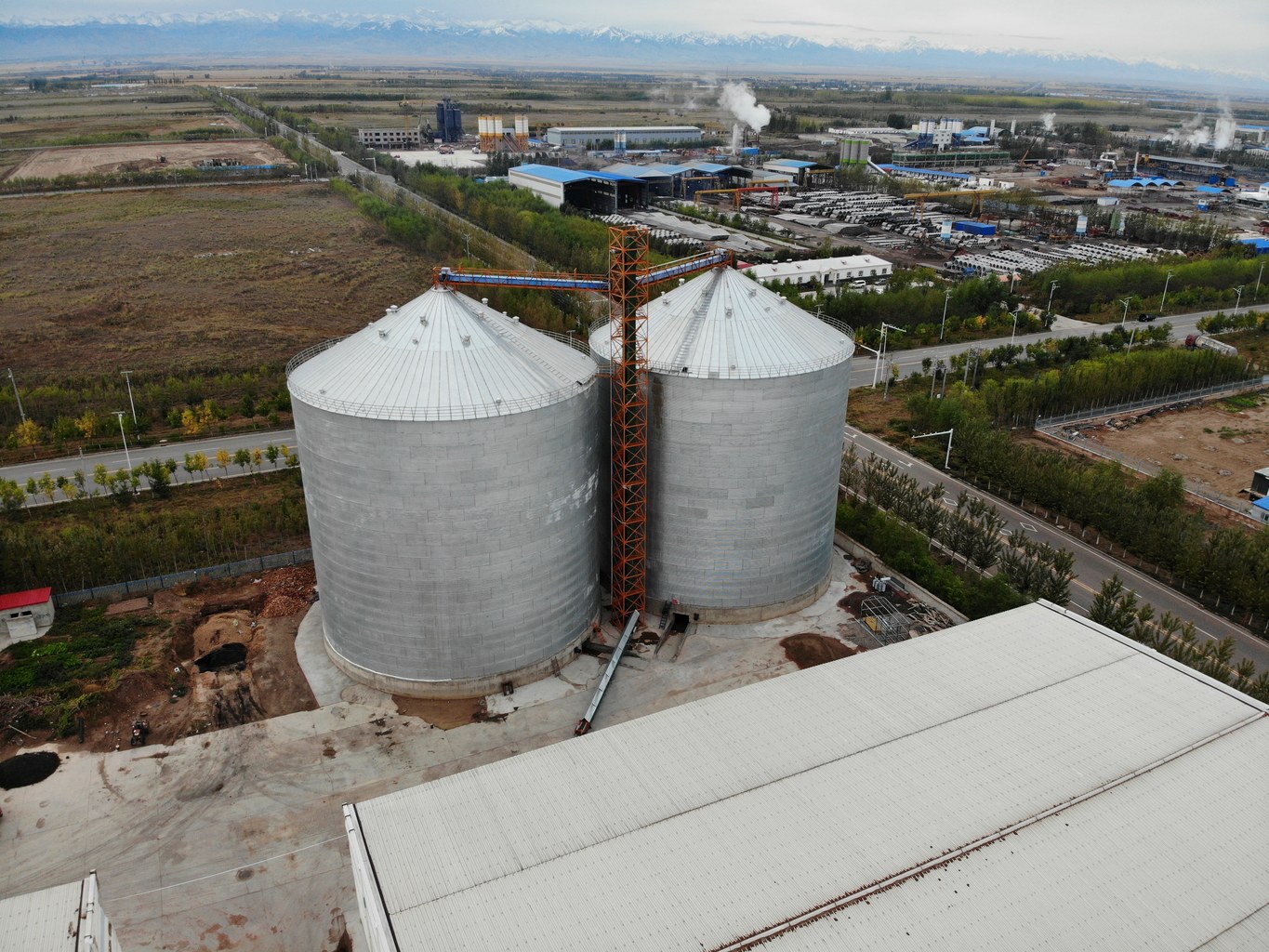
The paddy side follows the classic grain-facility chain: receiving pit → cleaning → drying (where harvest moisture requires it) → silo storage. Rice-mill specifics apply at every stage. Cleaning matters more than for most grains because paddy’s husk fraction carries dust, spores and insects — the pre-cleaning benefits described in our grain cleaning article translate directly into milling yield. Storage design must respect paddy’s physics: a steep angle of repose (37–45°), high bulk porosity, and a husk that shelters insects — all examined in detail in our paddy storage article. Mill paddy storage spans from a few hundred tons (hopper-bottom working silos) to tens of thousands of tons (flat-bottom silo groups on engineered foundations), with capacity deciding configuration per the universal rule. Monitoring — temperature cables plus aeration — carries the mill through the storage season exactly as it does a commercial depot.
The Mill’s Working Buffer: Day Silos
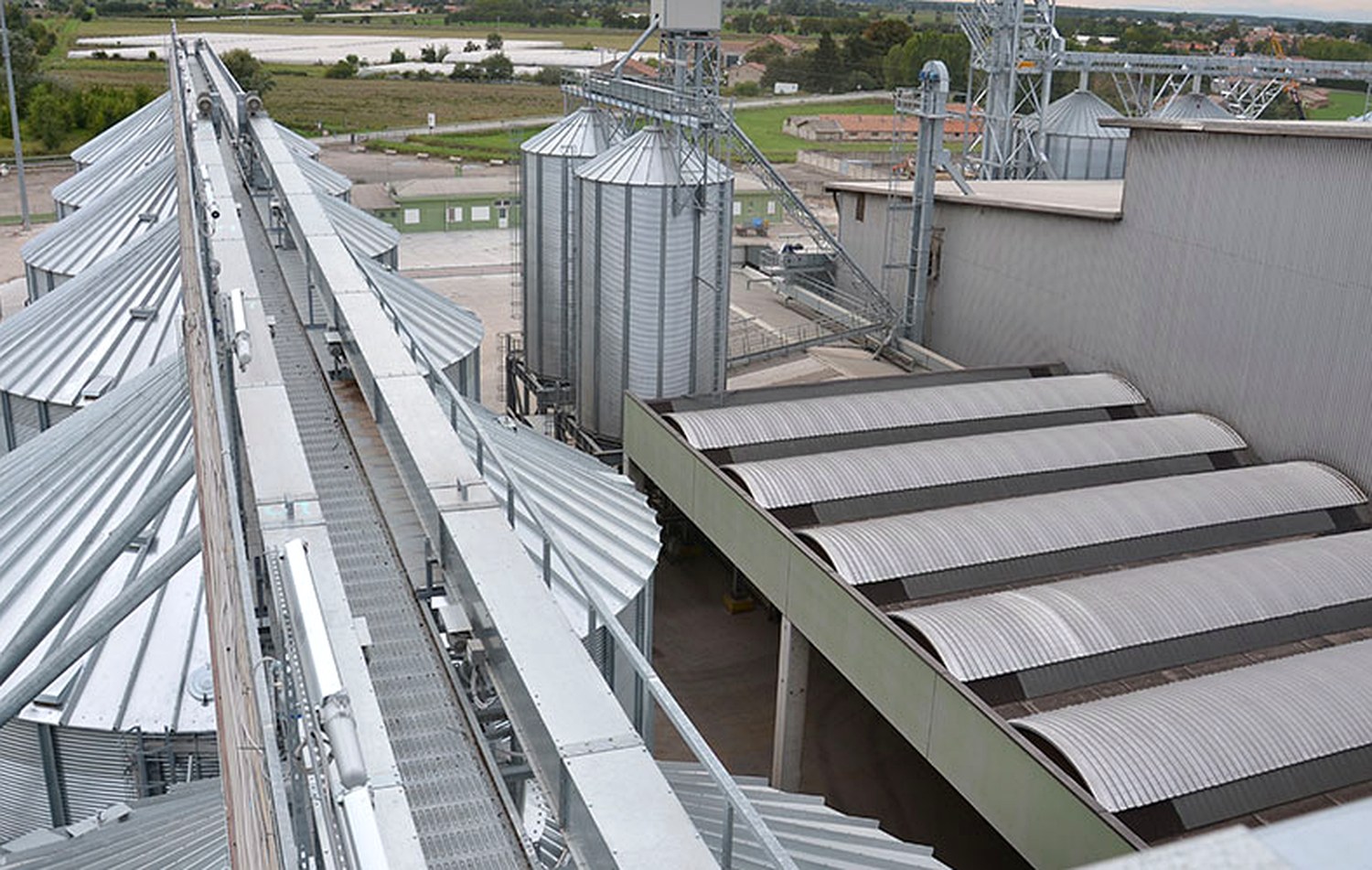
Between raw storage and milling, paddy passes into small day or surge silos that decouple the mill’s steady appetite from the storage yard’s batch movements. These buffers are almost always hopper-bottom units: modest capacity, complete gravity discharge, easy lot switching, and metered feed into the cleaners and hullers. Sizing logic follows milling rate — typically holding hours of production, not days — and reliable flow at the discharge matters more here than anywhere, because a bridged day silo stops the entire mill.
Finished Rice: A Different Storage Problem Entirely
Milling strips away the protections that made paddy storable. Polished rice has no husk, no bran layer — it is vulnerable to moisture swings, insect infestation, and odor pickup, and its commercial life is measured in weeks-to-months under good conditions, not the season-long horizons of paddy. Finished-rice storage therefore optimizes for protection and turnover, not volume:
Small hopper-bottom silos or bins above the bagging line, sized for lots and grades, with complete discharge between lots for hygiene and traceability.
Sealed, humidity-controlled storage — finished rice absorbs and releases moisture with ambient conditions, and packaging should happen from a stable product, not a swinging one.
Strict first-in-first-out — finished rice aging is a quality clock; the storage layout should make FIFO the path of least resistance.
Insect exclusion discipline — once milled, chemical treatment options narrow sharply; keeping insects out of the finished-rice environment is far easier than removing them.
By-Products: Bran and Husk
Rice bran is an oil-rich, enzyme-active fraction that spoils fast; small-scale mills dispatch it quickly to oil extraction, and where buffer storage exists it is short-term, cool and turned. Bran’s oil content makes it the least patient material on the mill site.
Rice husk is the opposite engineering problem: extremely light (bulk density around 90–150 kg/m³ — roughly one-sixth of wheat), abrasive, interlocking and dusty. Practical husk storage is designed by volume, not weight: a ton of husk occupies 2.5–3 m³. The design essentials are proven in dedicated husk silo practice: large-volume low-pressure silos, generous hopper angles (60–70°, far beyond ordinary grain values), multiple discharge points or anti-arch measures, sealed covers against dust escape, and inlet distribution that prevents the fine/coarse segregation that skewed husk piles develop. Mills that also burn husk for energy add the biomass storage safety layer — off-gassing awareness, CO monitoring in enclosed stores, and ignition-source discipline.
Putting It Together: The Mill Storage Map
| Zone | Material | Typical configuration | Primary design driver |
|---|---|---|---|
| Raw intake | Paddy | Pit → clean → dry → flat-bottom silo group | Season volume, moisture control |
| Working buffer | Paddy | Hopper-bottom day silos | Continuous mill feed, reliable flow |
| Finished rice | Milled rice | Small hopper bins over bagging | Turnover, hygiene, lot control |
| By-products | Bran / husk | Short-term bran storage; large-volume husk silos | Bran: speed. Husk: bulk volume, dust, arching |
The pattern to notice: one mill, four storage personalities. Paddy storage borrows from grain-depot engineering at scale; day silos and finished bins borrow from food-grade handling; husk storage is its own specialty. Getting each zone right — rather than one generic design repeated four times — is what separates a mill that runs from a mill that fights itself.
Mill Layout Logic: Where Storage Meets Flow
Storage zones earn their design when the layout between them is honest about how a mill actually runs. Paddy storage wants adjacency to the intake and pre-cleaning line, so that harvest trucks never cross the finished-product side of the plant; day silos want to stand close to the mill building, shortening the constant shuttle between yard and hullers; finished-rice bins belong directly above or beside the bagging and dispatch line, because every meter a milled product travels is exposure time; and husk storage must sit with the wind and dust map in mind — downwind of the mill proper, close enough to the boiler or truck loading point that its awkward volume does not travel far. Mills that grow by accretion often violate all four principles at once, ending with paddy trucks threading between finished-rice pallets and husk dust drifting over everything; the cure is not relocating buildings but re-zoning flows, and it is one of the highest-return reorganizations a congested mill can make. New-build mills get the same logic for free by planning the zones in the stated order — raw, working, finished, by-product — with the material flow moving in one direction around the site, never doubling back through a zone it has already left.
Modernization Path for Older Mills
Most rice mills in operation today were built in stages, and their storage reflects every era they passed through. The modernization sequence that pays reliably: first, instrument what exists — temperature monitoring and aeration control on the paddy silos, however old, protects the largest inventory asset immediately. Second, rationalize flow zones — re-routing trucks and pallets so raw and finished sides stop crossing, which costs paint and management, not capital. Third, upgrade the highest-friction storage: replacing chronic-bridging husk handling or a ratholing day silo removes daily production interruptions that everyone has normalized. Fourth, add finished-rice bulk bins at the bagging line, the stage where quality sensitivity meets handling frequency and where small investment buys outsized protection. Fifth, extend by-product value — husk fuel systems and bran logistics turn storage zones into revenue zones. Mills that follow this order report the same pattern: the early, cheap steps fund the later ones through recovered yield and stopped losses, and the “modernization program” completes itself on its own savings.
FAQ
Can finished rice share silos with paddy? Physically no mill designs it that way, and for good reason: paddy storage practice (aeration regimes, fumigation timing) is wrong for milled rice. Dedicated finished-rice bins are the standard.
How big should husk storage be? By volume first — check that the silo volume matches the husk tonnage at its true density (2.5–3 m³/t) before any tonnage rating, and plan the discharge system for arching from day one.
What’s the highest-return storage upgrade for an older mill? Most often, temperature monitoring plus aeration control on the paddy silos — the same answer as for farm storage, protecting the mill’s largest single asset: its raw grain inventory.