

Fly Ash Silo Design Essentials: Sealing, Aeration, Moisture
Fly ash is the most-stored industrial powder in the world — thermal power plants produce it continuously, regulations require dry collection and dedicated storage, and cement and concrete industries consume it by the million tons. Yet fly ash punishes generic silo designs: it is ultra-fine, hygroscopic, variably reactive, and arrives hot. A fly ash silo that ignores any of these facts becomes a caked, blocked, under-rated structure within its first years. This article collects the design essentials in one place.
Know the Material: Finer Than Cement, Hotter Than Ambient
Fly ash from thermal plant collection systems is dominated by particles under 45 µm — typically 80–90% passing, with median particle sizes of 10–20 µm, finer than most cement. Its loose bulk density spans roughly 0.7–1.1 t/m³, but it densifies toward about 1.3 t/m³ in storage; structural design must respect the settled (aerated-to-deaerated) condition, whose loads can run some 30% above loose condition. Two more material facts drive everything downstream: fly ash enters the silo at elevated temperature (commonly 120–150°C from conveying), and its loss-on-ignition (LOI) — unburned carbon — varies by plant and fuel, changing its stickiness, moisture appetite and even its explosibility behavior. LOI above roughly 6% is a design-changing value: steeper cones, more aeration, and revised explosion protection.
Sealing: The Silo Is a Vessel, Not a Funnel
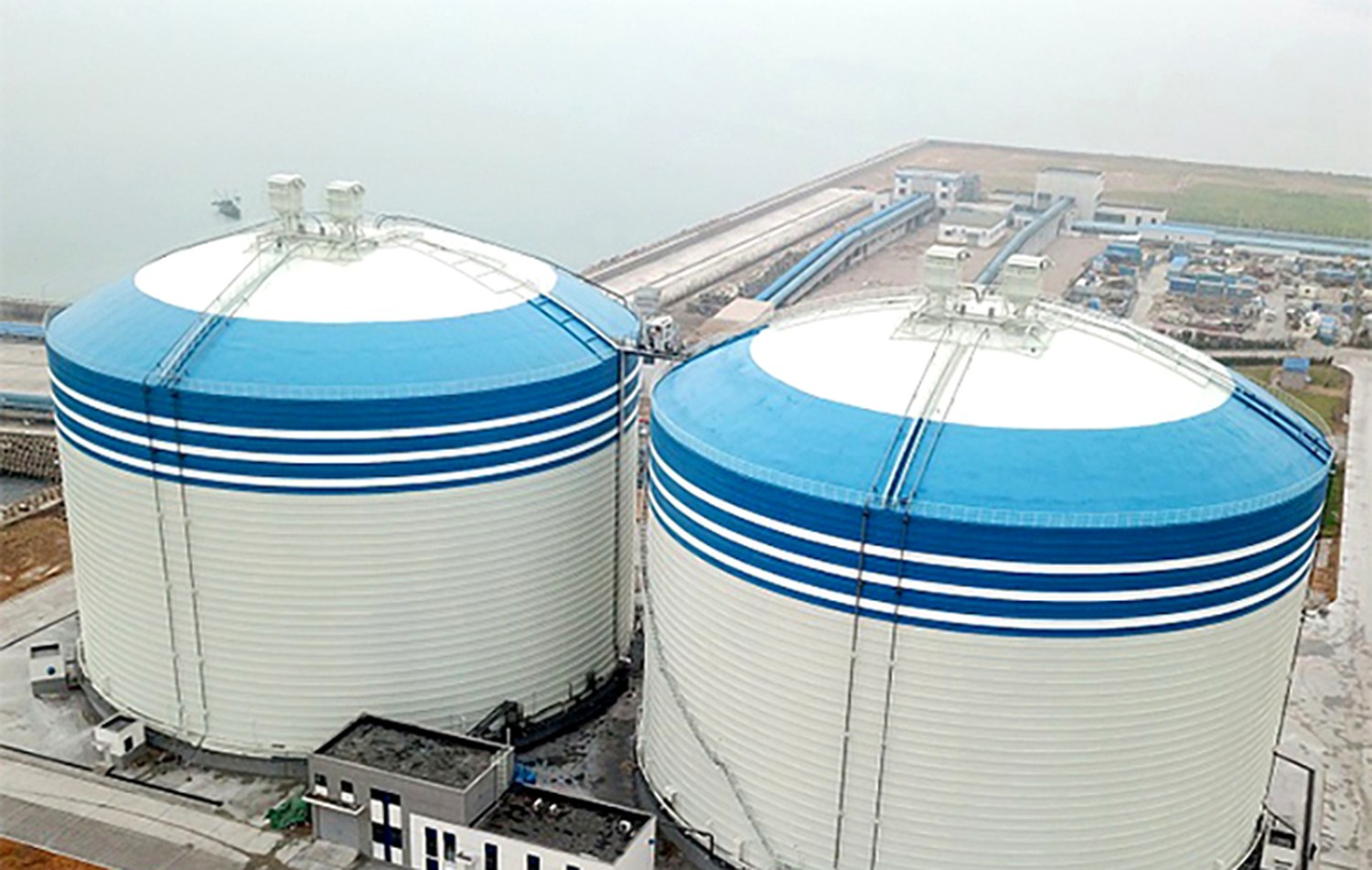
Because hot ash cools inside the silo, the internal atmosphere constantly redistributes moisture toward the cooler wall and cone surfaces — the exact surfaces where ash then hydrates and hardens. Sealing strategy directly attacks this:
1. Envelope integrity: gasketed roof hatches, sealed cable and pipe penetrations, and maintained pressure/vacuum relief valves. The silo’s pressure envelope also has a structural role — ash silos are designed for modest positive and negative pressure, and a blocked bin vent can exceed design negative pressure in seconds; the roof is what fails first.
2. Keep the inventory moving: first-in-first-out is not a slogan but a moisture-defense. Static zones age, cool and cake; aeration sequencing that renews the full cross-section prevents the wall-side annulus from becoming the hardened ring that eventually chokes discharge.
3. Dry air only: fluidizing air must be dried — dew point discipline for instrument and aeration air is standard engineering practice for ash service, because injecting humid air into fine ash is the fastest known recipe for cemented cone sections.
Aeration and Discharge: Design for the Fine Powder Reality
Fine dry fly ash responds well to fluidization, and the established layout is zoned aeration pads across the cone and lower shell, cycled in rotation (for example, zones on for tens of seconds with minutes between cycles) rather than run continuously — saving energy and avoiding over-aeration. Outlet sizing follows powder-flow engineering: circular outlets in the 400 mm class or equivalent slotted outlets, with cone angles from about 60° and steeper (65–70°) for high-LOI or higher-moisture ash — values set by the material’s measured flow properties wherever the project warrants shear testing. Complementing aeration, air cannons at the cone provide the shock option for hard arches; the division of labor between pads and cannons follows the framework in our unblocking guide.
Moisture: The Three-Line Defense
Line 1 — control what enters: intake ash moisture below about 1%, verified by the collection system’s performance; and weathertight sealing so seasons cannot re-wet the inventory.
Line 2 — manage the internal climate: 15–20% headspace buffer volume (never fill to the roof) lets hot ash cool without driving condensation directly onto surfaces; instrumentation-grade dry air for aeration; temperature monitoring across the silo cross-section to catch the cooling front as it moves.
Line 3 — plan the exits: schedule complete silo emptying roughly annually. The emptying removes settled zones before they become chemistry problems and gives inspection access to the cone surfaces where caking starts.
The structural and systems context — why large fly ash units are welded flat-bottom silos, and how discharge, dust collection and instrumentation integrate — is covered in our fly ash silo systems overview.
From Design to Decades: Operating the Asset
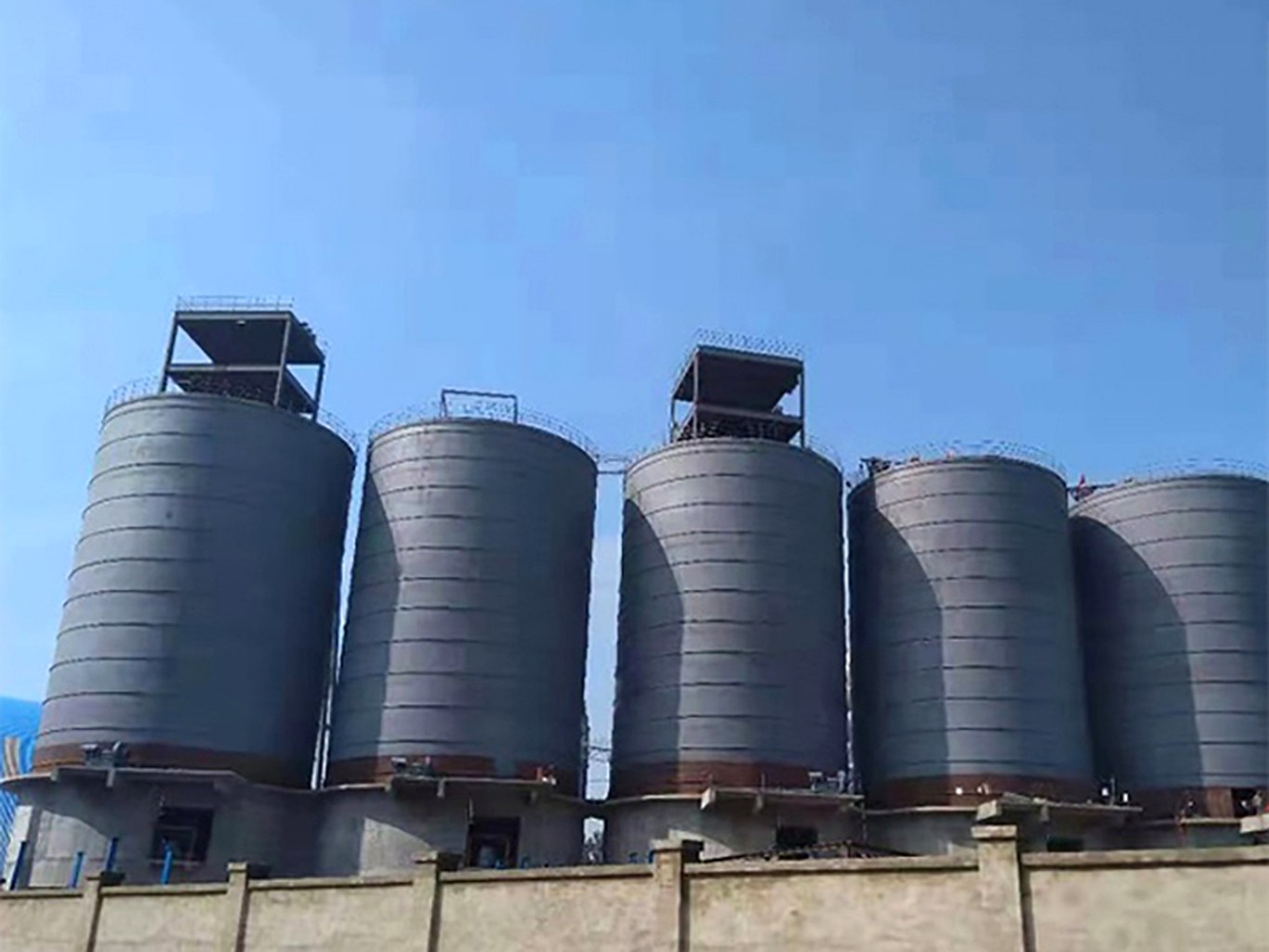
A fly ash silo’s design intent only survives contact with operations if a few routines hold for the asset’s life. Intake discipline: verify that conveying and aeration systems run their designed sequences during every filling cycle — skipped aeration cycles compound into deaerated, dense zones that later discharge erratically. Turnover discipline: the FIFO plan exists because static ash ages; operations that “save” the contents of one silo for a year discover that the saving converted fluidizable powder into a monolith with an aeration system attached. Monitoring discipline: temperature trends across the cross-section reveal the cooling front’s progress after hot intake, and their flattening is the signal that the inventory has stabilized; persistent warm zones in settled ash deserve investigation, not observation. Maintenance discipline: aeration pads cycled by design live long; pads run continuously wear and channel; the difference shows up years later as cone sections that fluidize unevenly. And annually, the planned full emptying — inconvenient, unscheduled-feeling, and the single practice that most reliably separates thirty-year fly ash silos from ten-year ones, because it resets every chemistry and gives eyes to every surface where caking begins.
None of these routines is technically demanding. Their challenge is institutional: keeping them running across staffing changes and production pressure, when the silo — silent, full, apparently fine — never asks for attention until it is too late.
Safety Layer: Explosion and Ignition Discipline
Fly ash’s dust fraction places these silos inside combustible-dust engineering territory, and the safety layer deserves explicit treatment alongside the flow and moisture design. Electrostatics comes first: pneumatic filling is the classic charging mechanism, so all conductive components — silo body, roof fittings, level instruments, aeration hardware, flexible connections — must be grounded and bonded with verified continuity, because an ungrounded fitting atop a filling silo is a spark source positioned exactly where dust clouds form. Ignition-source control extends to the conveying line: spark detection and interception where upstream processes can emit embers, and maintenance discipline that keeps buckets, belts and chains from creating friction ignition inside elevators feeding the silo. Explosion protection per recognized practice — venting panels sized and maintained (corroded or repainted panels with raised burst pressure are a documented failure mode), or suppression where venting is impossible — covers the consequence side. And the collection system serving the silo follows the same rules, with one absolute: different combustible dusts never share one collection system, because their combined behavior is not the average of either. The overhead of this discipline is modest when designed in; its absence is how powder plants make the evening news.
FAQ
Why specify cone angle by LOI? LOI proxies unburned carbon, which makes ash stickier and more moisture-hungry; high-LOI ash demands steeper cones and more aggressive aeration for the same flow reliability as lean ash.
Can I store fly ash long-term? Sealed, dry and turned — yes, though most plants design for throughput, not years of static inventory. If long-term storage is the mission, sealing grade and monitoring density both go up a class.
Is fly ash explosive? Its dust can be, and ignition sensitivity rises with fineness and (in practice) with carbon content. Grounding of all conductive parts, venting to recognized practice, and never mixing different combustible dusts in shared collection are the baseline rules.